

How the new Clipsal AFDD prevents house fires
See how Christchurch homeowner, Paul Griggs, uses Clipsal’s newest electrical safety device to prevent house fires.

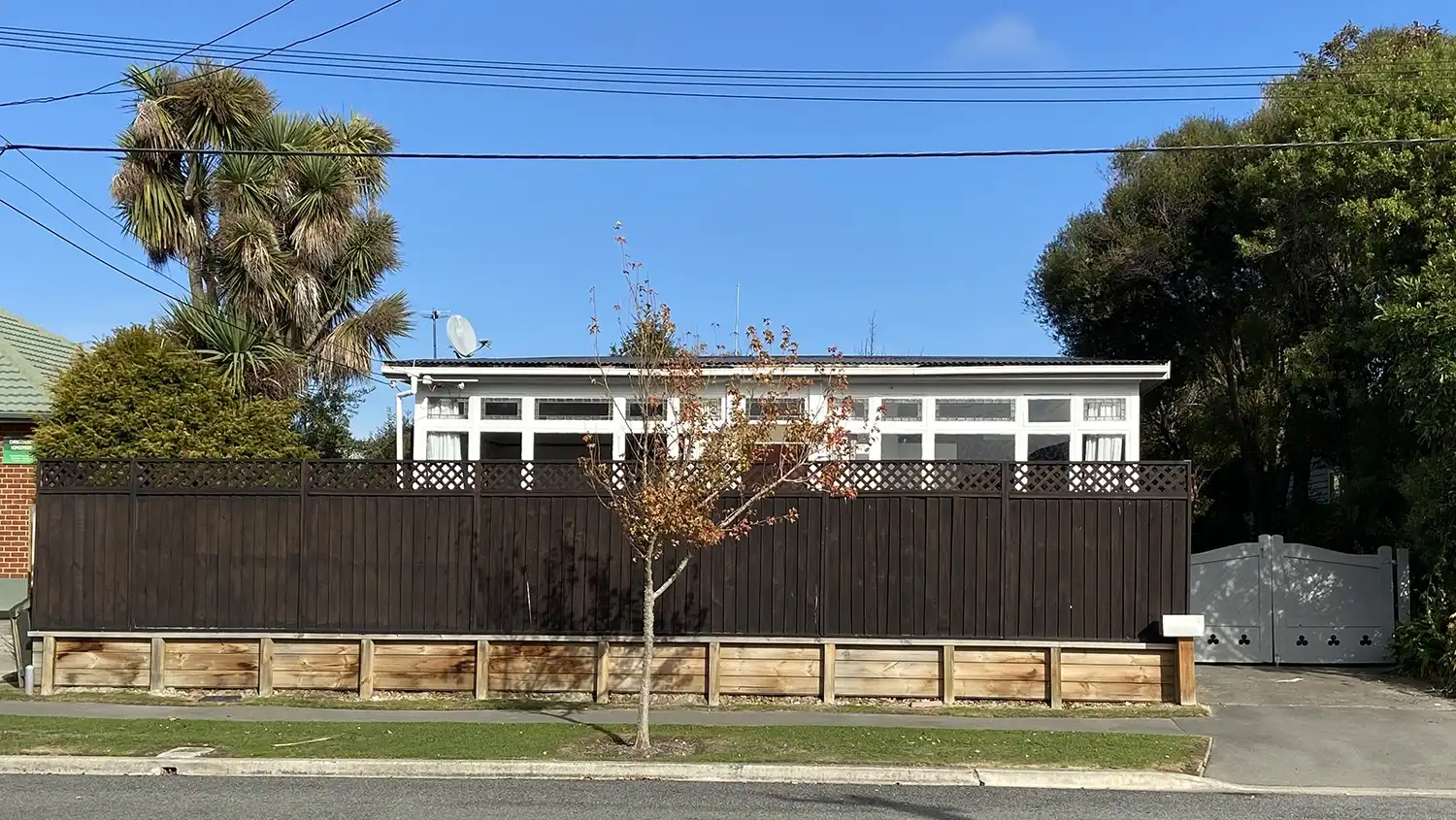
When Christchurch homeowner Paul Griggs decided to sell his family’s newly renovated home, he discovered serious problems with the home’s switchboard. To prevent future issues for potential buyers, he decided to look for a solution that could keep the home safe without needing a costly full rewiring. The new Clipsal AFDDs — particularly useful for older homes — provides crucial protection against house fires by tripping circuits in event of electrical arcs, solving Paul’s electrical safety concerns while saving him from the time and cost of a full rewire.
Paul’s electrical safety problem
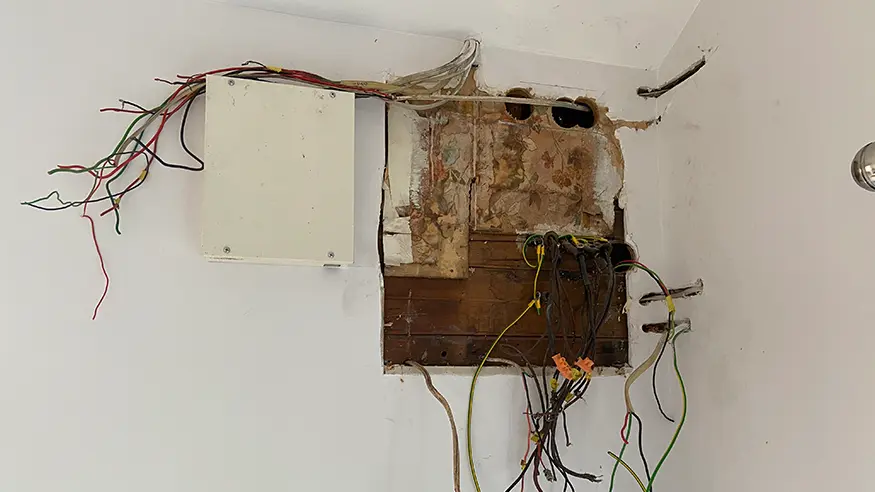
Christchurch homeowner Paul Griggs had decided to sell his family’s newly renovated home, the Woolston home. However, he was dismayed to discover serious problems with the home’s switchboard. Not only was it dated, but the breakers inside the switchboard were also ceramic.
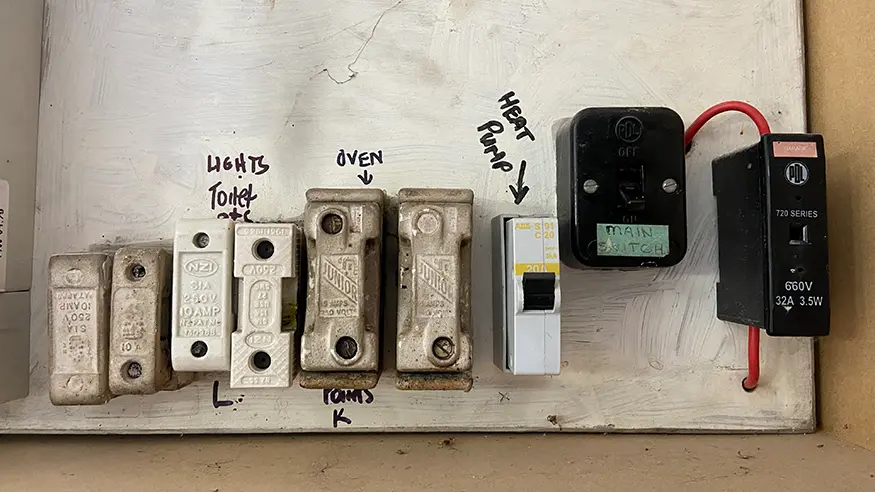
How the Woolston home was wired
The Woolston home contained what Griggs describes as a ‘mixed bag’ of wiring. Built in 1920, it was extended in the 1960s to double its size. Griggs and his family have lived there since the 1990s, adding a garage and two sleepouts over that time, and then spending the last two years renovating the entire property for sale.
He says that the home’s wiring is a mixture of newer and older wires, some of which were encased in metal conduit. “It would be fair to say we were maximising the old wiring for the modern home’s necessities and the additional outbuilding,” Griggs explains.
While the family hadn’t experienced any significant problems, Griggs wanted to ensure the home’s electrical system couldn’t cause insurance issues for potential buyers and impact the sale price. But for an electrical inspector to sign off on the property’s electrical compliance, he found that the age of the house meant he could be facing a bill for complete rewiring.
Not keen on paying thousands of dollars on top of the recent renovation costs, Griggs did some more research and discovered a solution that could help him.
Clipsal’s AFDD-RCBOs: the ultimate electrical protection
The answer was Clipsal’s Arc Fault Detection Device-Residual Current Circuit Breaker with Overcurrent Protection (AFDD-RCBOs).
What are Arc Fault Detection Devices (AFDDs)?
Arc faults can occur when cables become damaged, often when squashed underneath or behind furniture, or simply through poor connections or old wiring. The insulation inside the damaged cable lets current leak out, generating heat and carbonising the material around it, which then becomes more conductive and generates a bigger arc that is invisible to those in the home until the cable or socket catch fire.
An Arc Fault Detection Device (AFDD) monitors a home’s circuits for electrical arcs. If it finds anything dangerous, it will trip the home’s electricity to disconnect the faulty circuit before it can cause a fire.
AFDDs’ ability to detect these arcs before a fire starts means they have been approved by many insurance companies as a way of mitigating risk. They’re particularly useful for:
- Older homes
- Wooden homes
- Properties housing occupants with limited mobility
- Rentals where tenants are plugging in multiple devices.
While RCDs and circuit breakers are standard additions to switchboards in New Zealand, AFDDs are still a relatively new concept there, despite having been mandatory in Canada and the USA for several years.
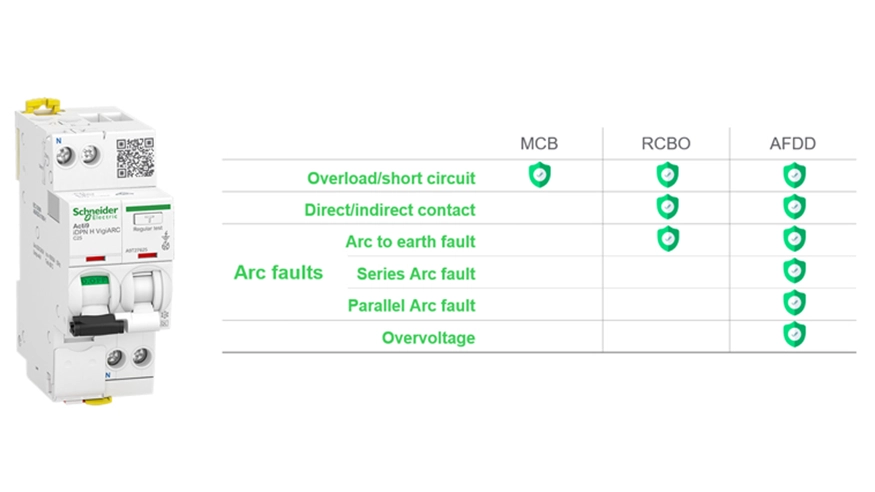
Clipsal’s AFDD-RCBOs: a safer, cheaper, and faster solution
The new AFDD-RCBO from Clipsal updates its original AFDD that launched in New Zealand in 2016, now combining the protective capabilities of circuit breakers and residual current breakers with the preventive capabilities of the AFDD. This allows it to protect people against electric shocks and prevent fires — acting as the ultimate solution for electrical safety.
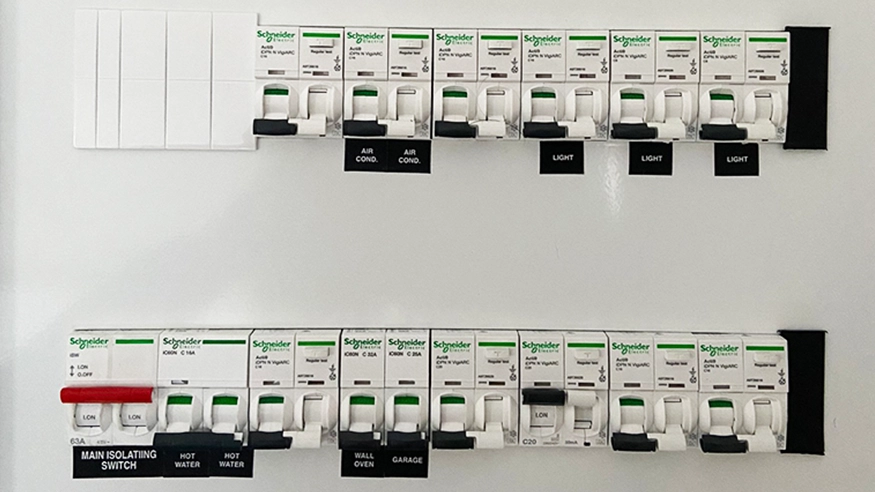
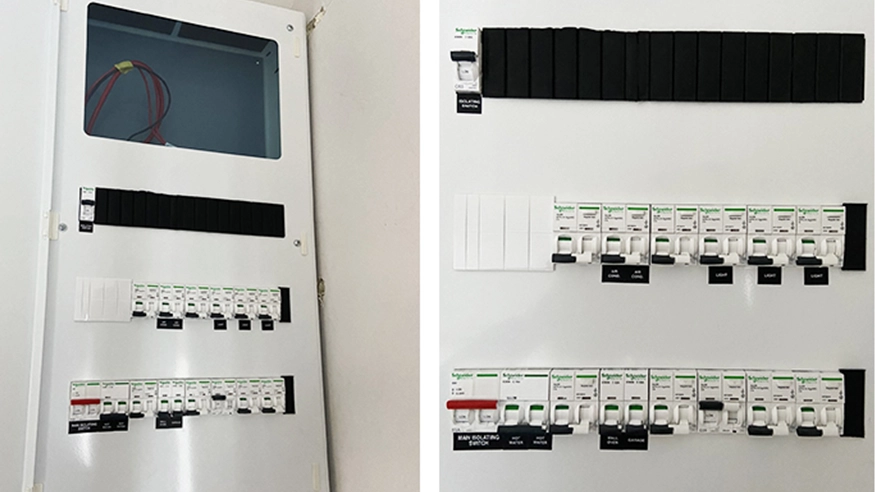
These devices ensured the new switchboard was fully compliant and safe, keeping both the new homeowners and their insurance company happy.
On top of solving Griggs’ electrical safety problems, Clipsal’s AFDD-RCBOs also saved him major expenditures in time and cost. After discussions with his electrician and insurance company, Griggs was assured that his compliance would be signed off if he installed a new mains board with the AFDD-RCBOs as part of it — no full rewiring needed.
“This installation was what we decided to go for, as the AFDD system would identify any issues in any one electrical line, meaning rewiring was then limited to only problem areas,” he says, “Additionally, we had the peace of mind that with installing AFDD-RCBOs we would have full insurance on the building and that any issues within the electrics would be immediately isolated by the device closing off that individual line.”
Peter Matthews of PPM Electrical Services in Christchurch (an electrician and electrical inspector) carried out the installation and says that the combination device is a useful tool for homes. “Arc fault detection is still a relatively new concept for New Zealanders and it’s a good one. They [arc faults] can happen in a newer site too, so it’s a very good idea.”
Matthews was also impressed by how easy the AFDD-RCBOs were to install and the fact that they detected an issue straight away. “It ‘red flagged’ it, so as soon as I turned it on it wouldn’t set,” he explains. “Through more investigation I found that particular circuit hadn’t been rewired as I’d been led to believe, and it was tripping on the residual function of the AFDD.”
The aftermath of Paul’s project
Paul Griggs says he was delighted with the result the AFDD-RCBO installation provided. “Once the work was completed, we had a robust and sound electrical system. If any issues arise in future, they’ll be immediately identifiable and repairable.”
The property sold for its asking price after the renovation and AFDD installation. Griggs says the installation of the AFDD-RCBOs gave everyone involved peace of mind and saved his family the significant expense of a full rewire.
“We had a better deal from the electrician due to ease of install, easy compliance sign-off and easier dealings with our insurance, plus the new owners’ insurance,” he says. “We can all sleep a lot better at night too, knowing this house should never burn down due to old or faulty wiring.”
Browse Clipsal Safety & Protection
Keep you, your family, and your home safe with Clipsal’s electrical safety products & solutions. Browse our Safety & Protection hub and discover the value of electrical safety and what Clipsal can offer for your home.
Continue Exploring

Electric Home Design Magazine
Sign up to download a free copy of our inspiration magazine, packed with and advice on everything you need to know about Electric Home Design.

Explore case studies
Discover how others have turned their homes into beautiful, smart and sustainable spaces they love.

Electric Home Design
Create a new world of possibilities for your home renovation or new house build, powered by electric. Unlock exciting home ideas for your kitchen, bathroom and more.

Home Hub
The Home Hub helps you easily find what you’re looking for across our website, no matter where you are in your new build or renovation journey.